|
|

|
|



|
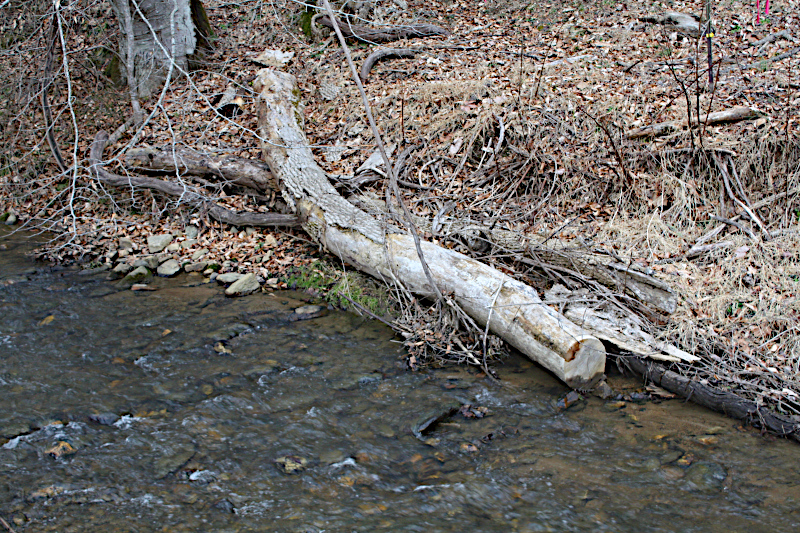
Fallen Ash tree and Grapevine in Walnut Creek. |
|
The opposite bank of Walnut Creek is lined with trees and bushes and for the most part nothing is ever cut. Trees grow old, die, and fall down or often are brought down by weather related events. When a large tree falls into the creek it is best to get it out so that the creek is not damned when the next high water comes, which can cause flooding and erosion of the banks. In the spring spring a large ash tree that had been dead and droping branches for years finally came down and the trunk settled at an angle right across the creek bed. A few weeks later, my neighbor who owns the property cut it up to clear the creek. |
|
|
|
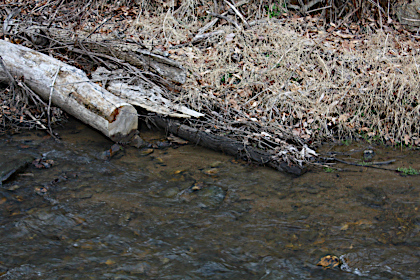
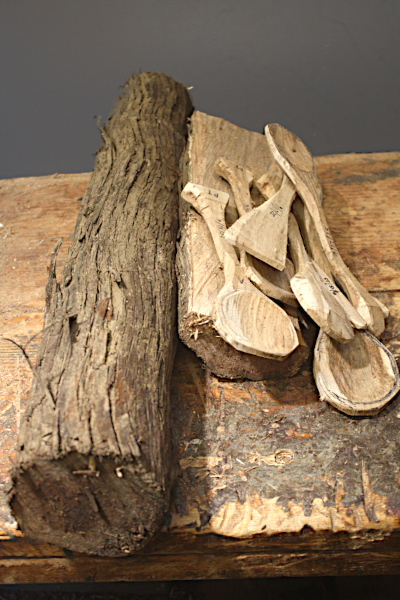
Early on after moving here, I had taken notice of this particular tree because it had the largest wild grapevine I have ever seen attatched to it. The ash tree is pictured in the center of the image at the top among limbs that have fallen off over the years. The dark, narrow log beneath is part of the grapevine, the left end of which is still rooted in the ground. Most of the grape vine was cut into sections along with the tree and when I saw a section of it lying in the creek bed, and from the end grain, looking much like a tree, I wondered what it would be like to carve. So I did a little research and learned that wood from wild grapevines, or grapewood as it is called, is most often used for rustic crafts or decorative purposes, but difficult to use for traditional woodworking. When I saw images of spoons made from grapewood that was all I needed to know to pluck a section of the grapevine out of the creek. The wood was noticebly heavy for its size and seemed to have a very high moisture content, but worked much like any other wood. I cut it into boards and roughed out a variety of kitchen utensils, which I then let dry for several months becase it was so wet. |
|
|
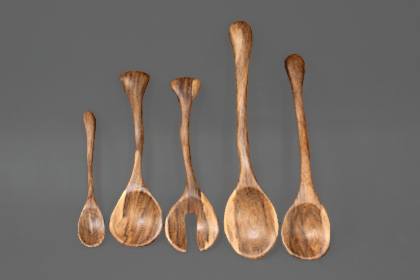
Grapewood did not seem difficult to work with as I had read, but this was an unusually large and straight section of grape vine. By the time I finished the pieces up they were dry with no cracks, and sealed up well. After I had finished these pieces, I read that grapewood is very porous so utuensils made from it are usually intended for dry use or decoration. I tested this by using the smallest spoon in the image to the left for hot and wet cooking and it was noticebly rough after one use, particularly the sap wood. I have dealt with this before and resanded the spoon and finished it again. After the second use, which included stirring hot coffee to give it an extreme test, it was rough again, but much less this time. |
|
From past experience, one possible solution to the problem is to dunk the grapewood pieces in water after the final sanding, let them dry well and consequently, rough-up. Then sand again, dunk again, and repeat until they don't rough-up, and then apply the finish. Extra steps, but not much extra work for some pretty pieces carved from a unique wood. |
|
|